Belgium boasts a rare density of circuits, karting tracks, and simulation centers within a small territory. For those looking to experience the thrills of driving, the options are not limited to booking a track day. Three distinct disciplines coexist, each with its own budget, time, and technical level constraints.
Driving on track, karting, or sim racing: concrete criteria for choice
Do you have two hours on a Saturday afternoon, or an entire day to dedicate to motorsport? The answer to this question already points towards one discipline over another.
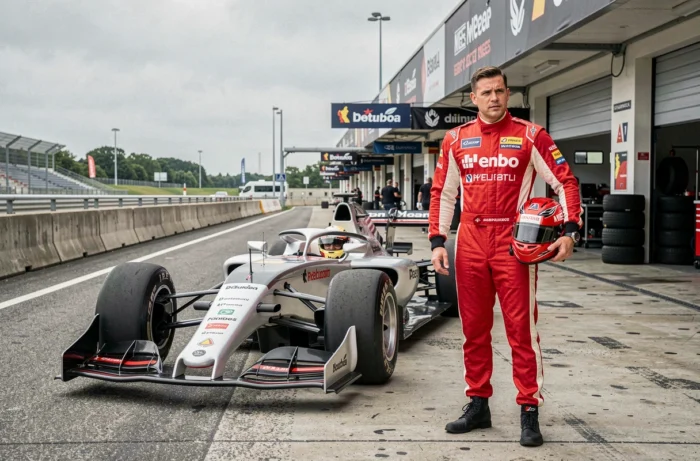
Real track driving requires the highest budget. A session of a few laps in a sports car represents a significant investment, along with travel and sometimes accommodation near the circuit. Time on track is limited, but the physical and sensory intensity is at its peak.
Competitive karting offers an interesting compromise. The cost of a session is significantly lower than that of a single-seater or GT experience. The trade-off: karting circuits impose environmental and logistical constraints often absent from tourist brochures, particularly regarding noise and emissions. For regular drivers, maintenance of the equipment and entry fees for competitive series can add up quickly.
Sim racing, on the other hand, changes the equation. Next-generation simulators faithfully replicate various circuits and categories (touring, GT, Formula 1). In Belgium, this practice is professionalizing with centers open to groups, families, and businesses, as reported by RTBF.
The initial investment is limited to the session price, and sim racing eliminates any environmental impact related to fuel. To explore the different facets of motorsport in Belgium, resources like andesmotorsport.be allow for comparison of available options.
Motorsport in Belgium: what the Spa-Francorchamps calendar changes for you
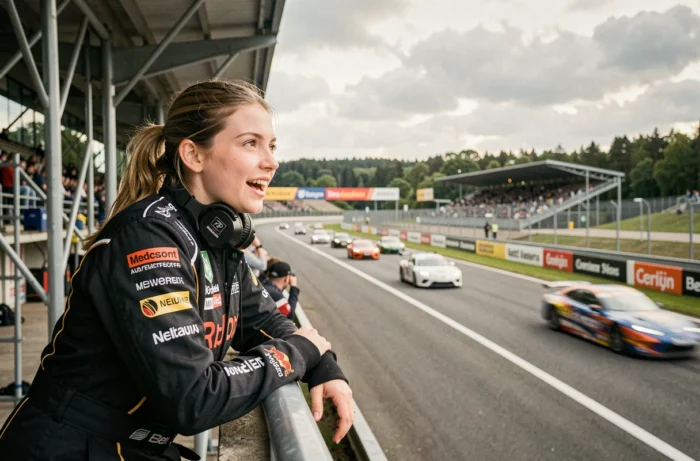
Spa-Francorchamps is not just a Formula 1 circuit. Its annual calendar features historic, endurance, sprint, GT, prototype, and single-seater events. The Spa Six Hours and the Ultimate Cup Series are among the highlights of the 2026 season.
Why is this important for thrill-seekers? Because the event schedule directly influences access to the circuit. Public track days, track experiences, and driving courses are interspersed between competitions. Booking without checking the calendar risks finding closed doors or encountering a period when prices rise.
The events themselves are worth attending as a spectator. Watching the Spa Six Hours means seeing racing cars from the 1950s to 1970s on one of the most demanding tracks in the world. The atmosphere in the paddocks is accessible, far removed from the locked-down protocol of a Grand Prix.
Comparison table: real driving, karting, and simulator
| Criterion | Track driving | Competitive karting | Sim racing |
|---|---|---|---|
| Budget per session | High | Moderate | Accessible |
| Time required | Minimum half-day | 1 to 2 hours | 30 minutes to several hours |
| Required level | Driver’s license, mandatory briefing | No license, from adolescence | No prerequisites |
| Environmental impact | Fuel, tires, travel | Fuel, regulated noise | Electricity only |
| Physical sensations | Maximum (G-forces, vibrations, heat) | Strong (lateral accelerations) | Visual and auditory, no real G-forces |
This table summarizes the main trade-offs. The choice depends as much on the budget as on the type of sensation sought. A simulator will never replicate the G-forces of a turn at Blanchimont, but it allows for discovering a track before committing to it in real life.
Competitive sim racing in Belgium: a discipline in its own right
Reducing sim racing to a video game would be a mistake. The Belgian competitive scene has structured itself in recent years, with ranked drivers and results broadcast online.
Public simulation centers offer various formats:
- Free sessions on high-end simulators, with choices of circuit and car category (touring, GT, Formula 1)
- Group or team-building formats, tailored for businesses or birthdays
- Internal competitions with rankings, for those who want to measure their progress
Sim racing develops transferable driving reflexes for real tracks. Reading trajectories, braking modulation, and managing overtakes can be learned both on a calibrated simulator and during a track day. Several professional drivers actually use simulation as a daily training tool.
Who is the simulator the best entry point for?
If you have never driven on a track and are hesitant to invest in a track experience, a session on a simulator allows you to test your appetite for the discipline. The financial risk is low, and the physical risk is nil.
For regular practitioners, alternating between sim racing and real sessions on track constitutes a coherent training program. The simulator serves to work on consistency and track knowledge, while the circuit provides the physical dimension and emotional engagement that the screen cannot replicate.
Belgium offers this rare feature: a legendary circuit, karting tracks spread across all provinces, and a rapidly expanding sim racing scene. Three entry points to motorsport, suited to three different profiles. The hardest part is not finding an activity; it’s choosing which one to start with.