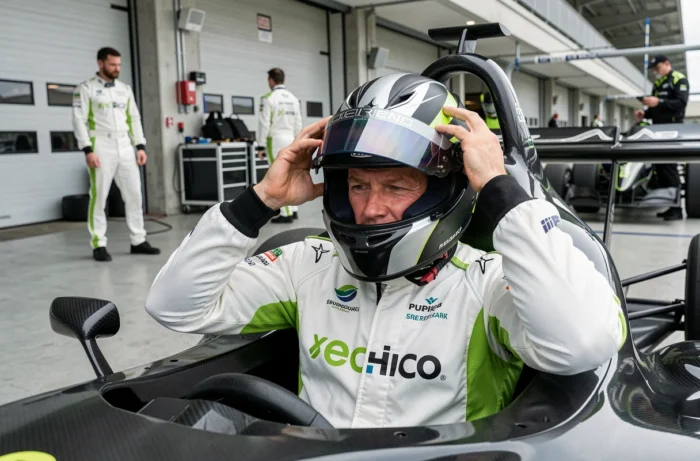
Automotive competition and eco-friendly motorsports refer to all racing disciplines that incorporate environmental constraints into their technical regulations. Sustainable fuels, electric drivetrains, traceability of raw materials: these parameters redefine how teams design, fuel, and recycle their competition machines.
Sustainable fuels in Formula 1: a technical competition ground in its own right
The rules set for Formula 1 in 2026 require sustainable source fuels, produced from waste, non-food biomass, or captured carbon. Each supplier can develop its own blend, provided it obtains FIA approval. Sustainability thus becomes a differentiating factor alongside engine power or reliability.
What distinguishes this approach from mere greenwashing is the traceability system mandated by the FIA. According to Autosport, the federation excludes the use of mass balancing, an accounting method that allows mixing sustainable and fossil materials in the supply chain without guaranteeing that the final product is genuinely renewable. By imposing a physical traceability of raw materials, the FIA requires suppliers to prove the origin of each batch of fuel.
Stakeholders involved in this transition share resources and feedback on specialized platforms, as can be seen on redracinggreen.be, which documents the advancements of sustainable motorsport in Belgium and beyond.
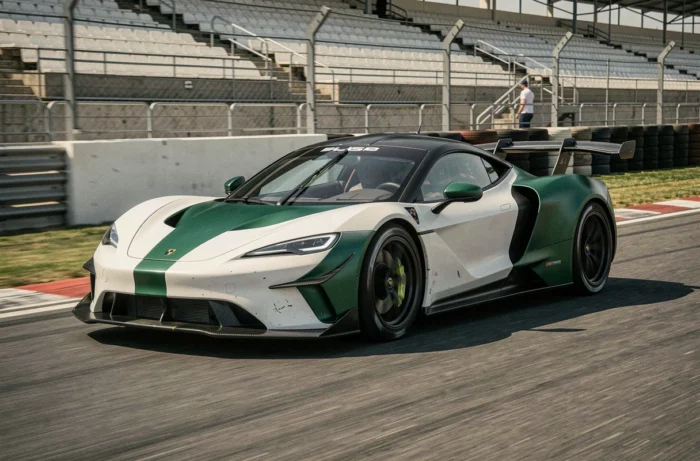
Formula E and life cycle: sustainability beyond the electric motor
Formula E is often reduced to the question of zero-emission drivetrains at the exhaust. The most informative angle concerns the management of the complete life cycle of vehicles and their components. According to GreenCars, the FIA now incorporates sustainability into the supplier selection criteria for the championship, alongside safety and performance.
Specifically, suppliers are evaluated based on the content of recycled or renewable materials in their parts, as well as their recyclability at the end of life. This requirement transforms the relationship between teams and suppliers: a high-performing but non-recyclable component loses attractiveness compared to a competitor that meets both criteria.
What this approach changes for other championships
The life cycle logic applied in Formula E creates a regulatory precedent. Other series, including national championships, are beginning to integrate similar requirements into their specifications. This gradual diffusion alters the priorities of engineers far beyond the simple choice of drivetrain.
Hydrogen in motorsport: real promises and technical constraints
Hydrogen is among the solutions regularly mentioned for decarbonizing motorsport. The principle is simple: a fuel cell converts hydrogen into electricity, with water vapor as the only emission at the exhaust. Several hydrogen-powered competition vehicle prototypes have already been tested in real conditions.
The determining question is not the onboard technology, but the origin of the hydrogen used. “Gray” hydrogen is produced from natural gas, with significant CO2 emissions. “Green” hydrogen, produced through electrolysis powered by renewable energy, has a much more favorable carbon footprint. In between, “blue” hydrogen captures some of the CO2 emitted during production.
- Green hydrogen remains expensive to produce in large quantities and requires reliable access to renewable electricity, which limits its rapid deployment in the paddocks.
- High-pressure storage imposes safety and weight constraints that directly influence chassis design and weight distribution.
- The overall efficiency of the hydrogen chain (production, compression, transport, conversion to electricity) remains lower than that of a lithium-ion battery recharged directly from the grid.
For motorsport, the choice between hydrogen and battery depends on the race format. Long events, such as endurance races, could benefit from quick hydrogen refueling. Short races on urban circuits are better served by battery electric drivetrains.

Environmental regulation and motorsport in France: obligations that already apply
In France, the AGEC law (anti-waste for a circular economy) imposes recycling obligations and extended producer responsibility on many sectors, including sports equipment. Tires, fluids, electronic components, and composite bodies used in competition fall within the scope of REP (extended producer responsibility) schemes.
The DGCCRF specifically monitors compliance with Triman and Info-tri markings on products marketed in France. For teams and event organizers, this means that every component discarded after a race must follow an identified and compliant treatment pathway.
A framework that extends beyond the track
The logistical organization of a motorsport event (transport of equipment, waste management on-site, dismantling of temporary structures) is also subject to these obligations. Environmental compliance is no longer a marketing argument: it is a measurable and controlled regulatory constraint.
Eco-friendly motorsport is not just about changing fuel or drivetrain. The traceability of raw materials, supplier selection criteria, and national regulatory obligations transform the entire industry, from vehicle design to waste management after the race. Championships that incorporate these parameters into their technical regulations set a framework that other series will have to adopt sooner or later.