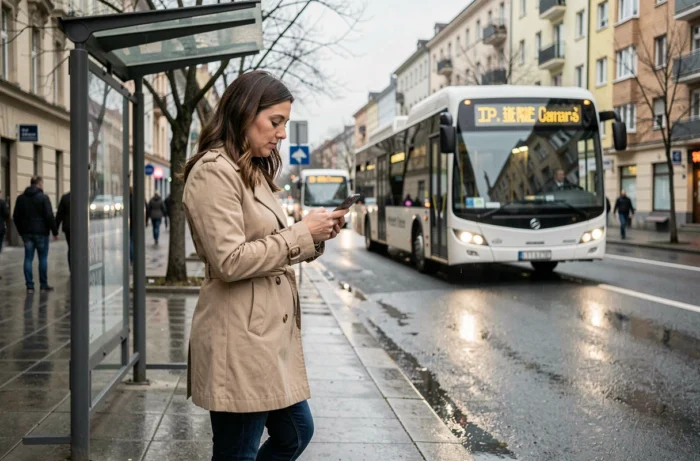
Choosing a mode of transport for your daily commute isn’t just about comparing prices or journey times. It’s also about asking what happens when Plan A falls through: a public transport strike, a car breakdown, torrential rain. How reliable a journey is depends as much on the available infrastructure as on your ability to switch quickly to a backup option.
Everyday journey reliability: plan for breakdowns and strikes
Most guides compare modes of transport on three criteria: cost, journey time and carbon footprint. They overlook one factor every commuter knows well: how reliable the service actually is, not how reliable it’s supposed to be on paper.
A commute by public transport works very well 90% of the time. The problem is the day there’s a strike, a signal failure or a connection is cancelled without warning. Without a backup plan, you’re stuck.
The idea isn’t to own a car “just in case.” It’s to have a primary route and a backup route that work together. For example, identify a cycle route between home and work that you could use, even if you only take it when there’s a disruption.
Or find a place where you can arrange an impromptu carpool (a park-and-ride lot or a group of colleagues) with just a few messages. To explore the options available in your area, transport options on Annuaire Voitures lists services by geographic area, helping you see what’s actually available near you.
Having a backup plan changes how you choose: the best mode of transport is the one you can still use when the others let you down.
Bikes and e-bikes: actual distance and perceived safety
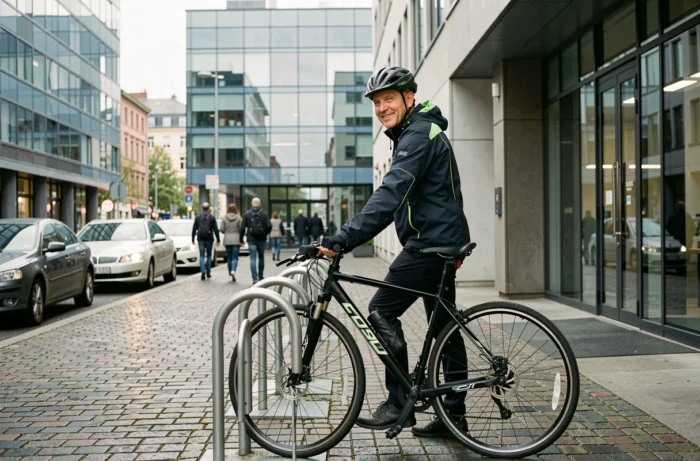
Cycling in France increased significantly between 2019 and 2025. In Paris, cycling on dedicated routes rose particularly sharply over the same period. This isn’t a passing trend: infrastructure is catching up, with increasingly long protected cycle lanes in major urban areas.
E-bikes deserve particular attention. A literature review presented by the University of Montpellier reports that the studies examined found that access to an e-bike led people to shift some of their car mileage to cycling. In other words, e-bikes replace car journeys, not walking trips.
But this option depends on distance, weather conditions and local infrastructure. Do you live eight kilometres from your office, with a protected cycle lane along the way? An e-bike is probably your best everyday choice. Are you twenty kilometres away, with the route running along a country road without a cycle lane? That’s a different calculation.
The often-overlooked factor: perceived safety
What stops many people from switching to cycling isn’t the cost or the distance. It’s feeling unsafe on certain stretches. People are more likely to choose a seven-kilometre route on a protected path than a four-kilometre journey shared with heavy goods vehicles.
Before deciding, try the route on a Saturday morning. You’ll quickly find out whether the infrastructure works for you or whether the stress would make it impossible to cycle five days a week.
Low-emission zones: check the rules before relying on your car
Have you noticed the low-emission zone signs at the entrances to some cities? Low-emission zones now cover several major French cities, and the rules vary from one municipality to another. The SDES notes that low-emission zone restrictions and exemptions are set locally, not nationally.
In practice, your car may be allowed to drive freely in one city but banned in the next, depending on its Crit’Air sticker. If you change jobs, move house or simply change your commute, check the applicable low-emission zone rules before assuming you can rely on your car as part of your routine.
This makes a car less reliable for everyday use in cities than you might think. Not because of traffic or parking (everyone knows about those), but because access rules can change from one year to the next depending on local regulations.

Transport budget: compare the full cost, not just the ticket price
The cost of driving isn’t just the price of a tank of fuel. Insurance, maintenance, parking and vehicle depreciation all add up: the actual monthly bill is often higher than drivers might expect. According to data from the Foundation for Nature and Humanity, people living in less densely populated areas spend a significant share of their budget on their vehicles.
By contrast, a public transport pass has a fixed, predictable price. Once you’ve bought a bike, it costs almost nothing to run. Here are the costs to compare to make an informed choice:
- Total monthly cost (not just fuel or a single ticket, but everything: insurance, maintenance, passes and wear and tear)
- Service reliability and time lost during disruptions (a daily ten-minute delay matters more than a modest monthly surcharge)
- How accessible the service really is from your home: service frequency, the last service of the evening and weekend coverage
- Whether it fits your physical or family needs (transporting children, carrying bulky shopping, reduced mobility)
Transport poverty: an issue that gets too little attention
The Wimoov Everyday Mobility Barometer, cited by the University of Montpellier, highlights that some people give up trips for financial reasons. It also points out that inadequate transport services limit the usefulness of even a free option.
Comparing modes of transport without checking whether they’re actually accessible from home is like comparing menus at a restaurant that’s closed. In rural or suburban areas, the choice sometimes comes down to driving or carpooling because there’s no bus route or train station nearby.
The best approach isn’t to look for the perfect mode of transport. Map out what’s available near you, try two or three combinations over the course of a week, and keep a backup plan you can put into action in under an hour. A reliable daily commute rarely depends on just one mode of transport: it’s often a combination of two complementary options that works best over the long term.