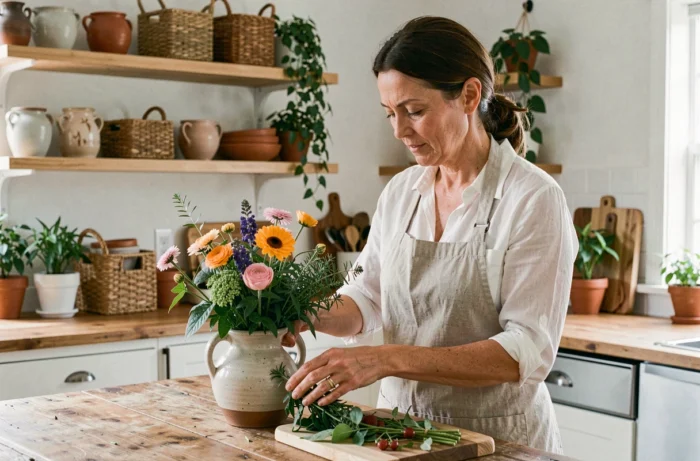
The home and garden news this fall 2026 is about more than color palettes and new furniture collections. Two major issues are reshaping homeowners’ choices: water restrictions, which are continuing well beyond summer in several French departments, and changes to MaPrimeRénov’, which are narrowing the range of work eligible for funding under the single-measure scheme. Both are directly influencing planting, outdoor decorating and renovation decisions this season.
Gardens and water restrictions in fall: adapt your planting rather than put it off
A common mistake is to assume that fall comes without water constraints. In Nord, Pas-de-Calais and several municipalities in the Soissonnais area, prefectural orders are extending watering restrictions well beyond the end of summer. In Maine-et-Loire, recent rainfall has eased some measures, but has not replenished reserves.
Before planning lawn seeding or installing planters, the first step is still to check the local order currently in force in your municipality. Alert levels vary from one area to another, and a generic seasonal calendar is no longer enough.
Following Ta Maison Ton Jardin news helps you keep track of regulatory changes week by week, department by department.
Low-water plants for a fall garden
Plant choices change dramatically when watering is limited or prohibited. Mediterranean perennials (lavender, shrubby salvias and gaura) can be planted in fall and tolerate dry soil once established. Ornamental grasses, such as feather grass and miscanthus, add movement without needing regular watering.
Planting water-wise species in fall means you won’t have to dig them up the following spring if restrictions are renewed. Applying mineral or organic mulch at planting time reduces evaporation and helps suppress weeds.
- Check the water restriction level on your prefecture’s website before planting or buying seeds
- Choose deep-rooted perennials that can draw water from below ground after a few months of establishment
- Always apply at least five centimeters of mulch to retain the soil’s remaining moisture
- Put off planting a conventional lawn, which needs a lot of water, and opt for hardy ground covers instead (creeping thyme, yarrow)
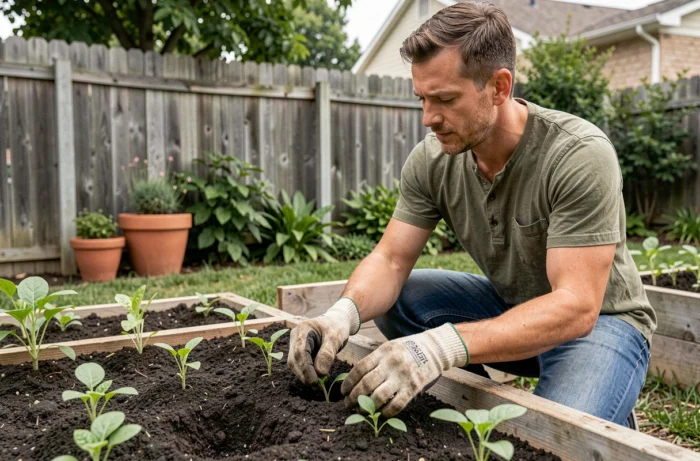
Outdoor decor without relying on water: choices that last
An inviting garden doesn’t rely on plants alone. When watering is restricted, hardscaping and furniture become the cornerstones of the design. Light-colored gravel, natural stone paving and dry-stone walls define the space and require no watering.
The current trend for warm shades, such as burgundy paired with butter yellow or bright blue, seen in fall-winter 2026 interior collections, also works outdoors. Outdoor cushions, glazed terracotta pots or solar lights are all it takes to create an inviting atmosphere without using a single liter of water.
Planters and pots: use less space without losing impact
Large planters lined up along a patio use a lot of water through evaporation. It’s better to group a few generously sized pots planted with sedums, purslane or hardy agaves than to use lots of containers.
Grouping pots reduces evaporation and creates a favorable microclimate for plants. One large planter retains moisture better than five small pots scattered in the sun.
MaPrimeRénov’ fall 2026: what home improvements are still eligible for funding
Changes to MaPrimeRénov’ are having a direct impact on renovation projects this season. Insulation and ventilation work are no longer funded under the single-measure scheme in mainland France. However, some heat pumps and connections to district heating networks remain eligible.
For major renovations to single-family homes, keeping a gas or oil heating system after the work is completed now makes the project ineligible for the grant. This changes the equation for homeowners who were considering a partial renovation.
Compare available schemes before signing a quote
Restrictions on MaPrimeRénov’ don’t mean that all work has lost access to financial support. Other schemes are available, including the zero-interest loan for energy-efficient renovations. Before approving a quote or starting work, first check which criteria apply to your situation.
- Determine whether your project falls under the single-measure scheme or qualifies as a major renovation, as the requirements differ
- Check whether each type of work (heating, insulation, ventilation) is eligible on the official website before committing
- Compare MaPrimeRénov’ with the zero-interest loan and local grants, which may cover work excluded from the national scheme
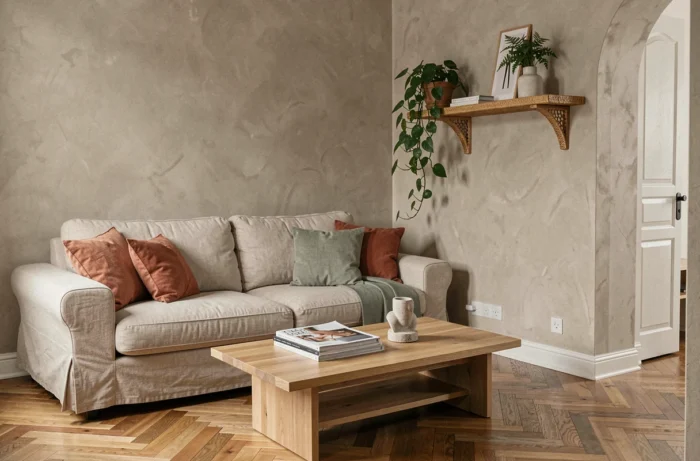
Colors and materials for fall 2026 interiors
In interior design, the fall-winter 2026-2027 season confirms the return of saturated shades. Burgundy is emerging as the dominant color in furniture and textile collections. Paired with materials such as lacquer, chrome or smoked glass, it creates a cozy atmosphere suited to living spaces.
Retro-inspired looks blend influences ranging from the 1930s to the 1980s: warm wood, graphic accents and Italian-inspired sophistication from the 1970s. The idea isn’t to recreate a particular decade, but to combine distinctive pieces.
Powder pink and bright blue round out the palette for anyone looking for combinations less predictable than the traditional burgundy and gold. In practice, two or three accessories (a cushion, a vase, a throw) are enough to bring in these shades without rethinking the entire living room.
This season’s decorating choices reflect two constraints: outdoors, water dictates planting and landscaping; indoors, public grants shape renovation plans. Taking these factors into account before buying a shrub or signing a quote can help you avoid costly changes in the months ahead.