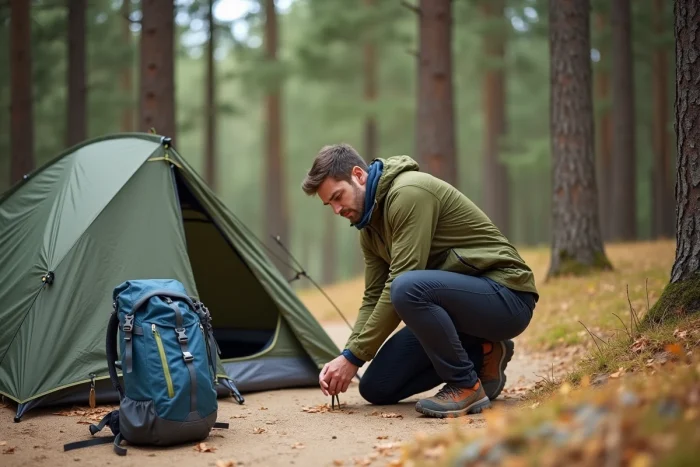
Wild camping in Biscarrosse faces a regulatory framework that most tourist guides overlook. Municipal decrees, Natura 2000 zones, coastal dune protection areas: each season brings its share of additional restrictions. Understanding the mapping of prohibitions before pitching a tent is the only way to sleep outdoors without risking a fine.
Mapping of prohibited bivouac areas in Biscarrosse
The municipality distinguishes three categories of land where overnight parking is systematically penalized: the beaches and dune cordon, the immediate surroundings of the lakes (Biscarrosse north and south, Parentis), and forest plots classified as fire defense zones. These areas cover a very large part of the municipal territory.
Municipal decrees evolve each season, which requires consulting the postings at the town hall or on the municipality’s website before any departure. A tolerated location from the previous summer may become a prohibited area after a revision of the local urban planning plan or a fire incident.
Fines for violations range from 135 to 1,500 euros depending on the severity and repetition of the offenses. Patrols from the National Forestry Office focus on access to the lakes and the most frequented forest paths, particularly between June and September. We observe that penalties are multiplying at spots shared on social media, making “secret” locations increasingly unviable in the medium term.
For those looking for where to go wild camping in Biscarrosse, reading the official maps and decrees remains a prerequisite for any serious planning.
Landes Pine Forest: Identifying a Viable Location
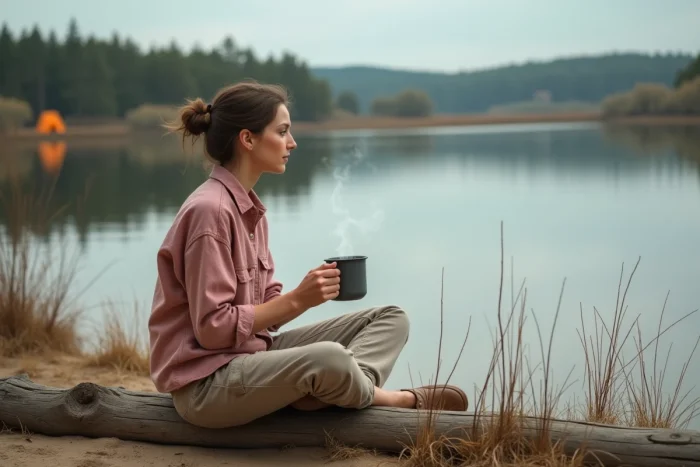
The communal forest and private plots represent the majority of the forest cover around Biscarrosse. Setting up a bivouac on private property without permission is illegal, even in the absence of a fence or sign. The cadastral map, available online, allows you to check the status of each plot before committing to it.
The fire risk conditions any bivouac under the pine cover. During vigilance periods (generally from mid-June to mid-September), access to forested areas may be prohibited by prefectural decree. The use of open flame stoves is banned in the Landes forest at all times.
What We Recommend for a Forest Bivouac
- Favor the edges of municipal bike paths (Biscarrosse-Sanguinet, Biscarrosse-Parentis) where the land status is public and regular passage discourages risky behavior.
- Stay at least several hundred meters away from classified wetland areas, identifiable on IGN maps by the mention “marsh” or “lagoon”.
- Set up the tent after sunset and take it down before dawn, in accordance with the legal tolerance for bivouacking (as opposed to extended wild camping).
- Never dig a fire pit or leave organic waste, even biodegradable, which attracts local wildlife.
This protocol does not guarantee the absence of penalties, but it significantly reduces legal and environmental risks.
Natural Area and Motorhome Area: The Realistic Alternative in Biscarrosse
The most reliable answer for sleeping close to nature remains the natural area. Le Frezat, a wooded natural area on the edge of the northern lake of Biscarrosse, offers spots under the pines with direct access to the bike path. The setting is closer to bivouacking than traditional camping: no mobile homes, no entertainment, a maintained but deliberately rustic space.
The motorhome area at Le Vivier, in Biscarrosse beach, offers access via credit card, spots under forest cover, and the ocean beach just a few hundred meters away. For van enthusiasts, it’s a compromise between autonomy and legality.
Why Natural Areas Are Surpassing Wild Camping in the Landes
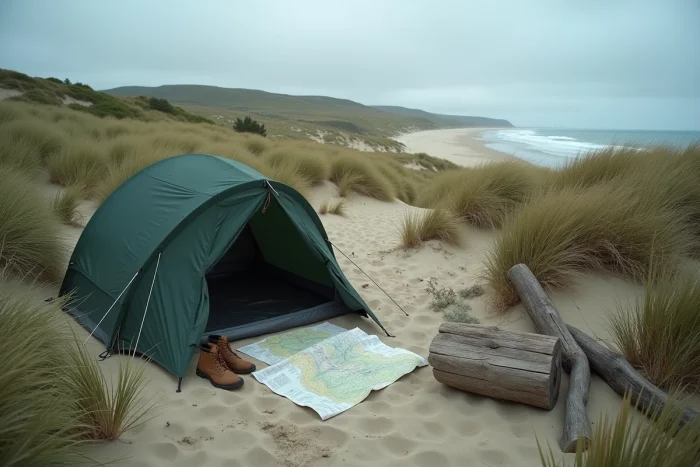
The offer of natural areas and tolerated parking has developed in direct response to the pressure on dune and forest environments. Local authorities prefer to channel flows to regulated sites rather than multiply penalties, which explains the density of areas around Biscarrosse and its lakes.
A spot in a natural area costs a fraction of the price of a star-rated campsite while maintaining the ambiance sought by independent campers. The difference in comfort with wild bivouacking is minimal: no pool, no bar, just a water point, basic sanitation, and the silence of the pine forest.
Bivouac Around the Lakes of Biscarrosse: Specific Constraints
The shores of the north and south lakes are subject to enhanced surveillance due to their classification as sensitive natural areas. The presence of the European pond turtle and several species of nesting birds justifies exclusion zones that on-site signs do not always clearly indicate.
We recommend not attempting to bivouac within the buffer zone indicated by environmental markers, often marked by wooden stakes. Nature guards from Bisca Grands Lacs conduct regular rounds in the most popular areas, particularly around the Parentis-Biscarrosse pond.
Cazaux-Sanguinet Lake, to the north, offers slightly less monitored shores, but the same legal framework applies. Spots accessible via the bike path from Sanguinet remain the most discreet, provided the bivouac protocol described above is respected.
The reality of wild camping in Biscarrosse can be summed up in one sentence: the truly practicable spots can be counted on one hand, and their viability depends on regulations that tighten each year. The natural areas of the municipality constitute the last space of freedom accessible without legal risk for campers who want to sleep under the pines of the Landes.